Showing posts with label Applications. Show all posts

Tuesday, February 17, 2009

Reject-me-not!

While it's been a while since our last post, we have not been resting on our laurels. During this time, we have released new versions of both Xslimmer and Snapshot. We have also released Sketches 1.5, and prepared and uploaded Sketches 1.6 to the iTunes Connect portal. Version 1.6 of Sketches, however, has already been rejected twice. As it happened with the undo icon back in October-November 2008, reviewers have found previously undetected issues in our product.

The first of these rejections was due to the fact the reviewer was confused about two distinct features: image hosting, and Web sharing. We had updated our application description to reflect the fact that sharing your images via twitter or email causes them to be uploaded to a new web hosting service we have developed anew for Sketches, instead of the former third party service we had been using. It was also explained that the reason for this change was to ensure an excellent quality at all times: we are not interested in placing ads on Sketches' image hosting services; we can act promptly on the event of unexpected downtime; and we can grow the service in the future with new features - none of which was possible with the previous offering.

The Web Sharing feature, on the other hand, allows customers to start a tiny Web server running inside Sketches in your iPhone, then download your pictures in PNG, JPG or PDF from your computer.

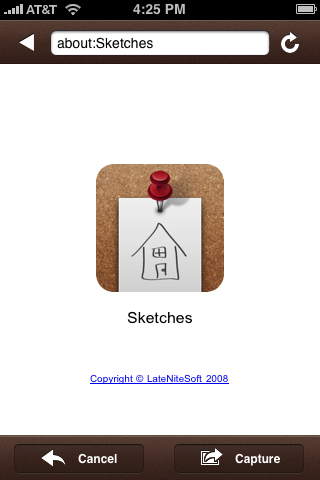
After activating the Web Server screen (see screenshot below), the reviewer somehow kept waiting for the drawing to be uploaded to our server. This, of course, never happened, and thus our app was rejected.

Picture 1562.png


When the rejection mail came in, I uploaded the same binary again and wrote back to the reviewer:

"Thanks for your feedback. Uploading to our server is only done when exporting to email or twitter.

What you attached as screenshot, is the integrated web server. That is, Sketches has a Web server that allows you to access your drawings from a Mac or PC using a Web browser, in order to export them. To do so, you simply have to connect to the URL address shown in that screen. In your case, if you open Safari, enter "http://10.0.0.3:8080" [IP address changed from original value] in the URL field. You should get something similar to the screenshot I have attached. Then you can press on the file type you want to export, jpeg, png or pdf, under any of the drawings to obtain a local copy.

I hope this clarifies it. Let me know if you need any further explanation."


A week later, the second rejection email was received. This time, the reviewer had found a true issue, totally unrelated to the previous discussion. Sketches Web capture mechanism used two icons that did not adhere to the iPhone Human Interface Guidelines "as outlined in iPhone SDK Agreement section 3.3.5".

IMG_0001.1.PNG


The funny thing is that those two icons have been there since the App Store launch back in July 2008.

What's interesting is that Sketches 1.6 is just a small, bugfix release that was submitted shortly after Sketches 1.5 was approved. Sketches 1.5 added some notable new features (such as our own image hosting service, as described above), and it was approved in just 40 hours. Somehow, improving over the existing feature set has triggered more alarms to fire off than creating new functions in the first place.

Anyhow, we talked to Adam Betts and he sent us a new pair of icons in no time. We created a new build and upload it again. 5 days later, we are still waiting for a response.

Monday, September 22, 2008

The Cruel Economy of the App Store

A recent article in Wired suggests that Trism’s creator could become a millionaire soon, from Trism sales alone. I doubt it, let me explain why.

Wired's article explains that Steve Demeter, the sole author of Trism, made more than $250,000 in the first two months after the the launch of the App Store in July 11th. That is, without a doubt, a nice sum. They conclude: “If the game keeps selling at this rate for a year, he will have made $1.5 million. Not bad for a lone coder.”

However, what the article fails to analyze are the dynamics of sales in the App Store, probably assuming that they will work out in a similar fashion as desktop online sales. The Mac shareware market is a healthy business with an ever-expanding user base, and products have considerable longevity after being introduced; thus, it is reasonable to approximate sales linearly as a rough figure of yearly revenues. In our experience, however, the App Store is currently operating in a way that resembles the media business more than the shareware market. Like in sales for a movie or a music CD, if you are able to produce a hit like Trism the App Store will give you 30-45 days of glory. Those are the days when your application will be listed as one of the top sold apps, as very well explained by John Casasanta. Being featured in the App Store will have an echo effect in other media and your app will be reviewed, analyzed and blogged about.

The App Store, being a tremendous sales channel, is obviously acting as the most influential source for iPhone software. Think of it as if there was a single Top 40 music radio station everybody listened to: moving up or down in the list has a huge impact on sales, and dropping from the list means your sales will be easily reduced by one or two orders of magnitude.

Let's look at this further.

App Store Sales


There are basically 5 parameters that affect your sales on the App Store:

+Product
+Price
+Apple’s product placement
+Position in the charts
+Star rating

Your product is described and shown as a series of screenshots in iTunes. The better the description and appeal of the images, the better for your sales.

Prices on the App Store are quite low. Ever since Super Monkey Ball was announced at $9.99 a few weeks before its launch, the psychological barrier for all games, and most other applications, was set at that price point, and lots of users will not buy anything above $4.99. This was a big surprise for us, as we thought that a game that normally sells for $40 in other platforms would sell for $20-$25 on the App Store. Anyhow, the lower the price, the higher the probability that your application will sell more.

Apple has a lot of prescription power. Whatever they promote on “What’s new”, “What’s hot” on the iPhone, or the iTunes App Store home page, will sell. At this point this is completely managed by Apple.

Being on the Top 25 generates sales per se. Users trust other users, and if your application is on top, many others will buy. In addition, being among the first applications in a category, like Entertainment, will also facilitate people finding you application and buying it.

The star rating also has some influence. It is another mechanism from users to tell other users if they like the application or not. In the App Store, anyone can rate an application, irrespective of they having purchased it or not. This helps applications get votes and comments. Most users use the overall star rating as a guidance: if the application has 3 stars or more, it must be OK; otherwise, it must be no good.

What marketing tools do developers have?


Product


A quality product with certain appeal, will be more likely to sell well, than poor quality products. But having a good product is not enough. More and more apps arrive at the app store each day. Unless the application comes from a big game studio, or a known developer, it is easy that good new apps get their sales diluted among the list of thousands of applications in the App Store. As there is no “try before you buy” mechanism, visual appeal is very important. The screenshots and the description of its functionality of your product will be key.

Price


This one is really tricky. Depending on how you price your application, you will get better or worse reviews, even from people that may not be that interested in your app. As of today, 3 of the top 5 applications are priced at $0.99, the other 2 are $1.99 and $2.99. Thus, the influence of price is huge. Having seen this, there are many developers that are following the "first free, then charge strategy". It is the case of Air Sharing, currently free, but that will most probably be at the top of the sales chart, once they change the price to their announced amount of $6.99.

Picture 1009.png


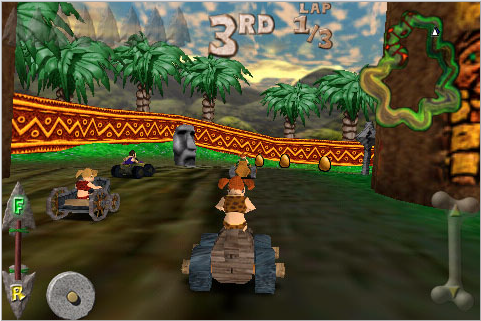
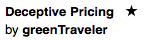
Today, Pangea’s games are on sale. Cro-Mag Rally is being sold for $1.99 when it was $9.99 a few days back. It has climbed to the Top 3 paid apps ranking. Prior to lowering the price you could see this kind of reviews:

Picture 1017.png


That is people, even liking the game, lower the rating due to price. After lowering the price, however, you can see this:

Picture 1018.png


The text of the review reads as follows: "A lot of early adopters paid $10 for an app that is now 80% less... a lame attempt by devs to drive up their sales rank. REALLY terrible way to treat customers. As for the game, it's not for me. But I wouldn't be complaining if they hadn't decided to treat early supporters like garbage. Thanks a lot, guys. You've cost yourself at least one future customer."

The dilemma is served. If you lower the price for your application, you will hopefully attract more people, but users who have purchased your application at the previous price will post negative comments about it, lowering your star rating.

The issue derived out of this is that many developers are opting for creating simple, nice looking, low-price apps. This lowers the risk of developers and provides higher probability of success. But, how many of these apps will get maintained once the initial 30-45 days are over and sales have gone down dramatically?

So, right price handling is very complex. It will influence your sales, charts, ratings and comments, and, the product itself, in the medium term.

Apple’s product placement


Most developers have no control over this factor. Big corporations, like EA, will obviously get some attention. But Apple will also promote products from other developers. We were lucky enough to be among this group for the App Store launch. Sketches was highlighted in several countries. And today you can go into Apple’s physical stores in the US and see the Sketches icon (Top line, 3rd from the right):


It was Apple, though, who decided to promote Sketches. We, of course, provided all the material and information they required. But it was Apple contacting us, not the other way around. Thus, there is little a developer can do, apart from creating a great product and get some visibility, then hope for Apple to like the product.

Product Position


The position your app has in the charts can only be managed by 2 factors: price, as discussed before, and updates. Price will influence the sales chart. Updates will allow for your application to be shown sooner in the category it belongs to.

Ideally, updating often would allow for your application to be listed before other apps in the category, making you sell more. Unfortunately, updating in the App Store is not fast. What's more important, the developer has no way to know how much time it will take for an update to be approved, possibly affecting your options to create marketing and advertising campaigns. Sketches 1.3 has been in review for more than a month now. In terms of positioning, we are totally lost towards the end of the Entertainment category. In addition, Apple discourages frequent updates, unless they fix severe bugs.


Star Rating


The App Store has no barriers for comments. As anyone can post an opinion on your application, developers are out of control on this. The good thing is that nice apps, will attract nice users, who will post nice reviews. On the other side, depending on different factors, mostly unrelated to the product itself, your app will also attract some unhappy users that will punish your every move.

Currently the global rating is built as the arithmetic mean of all votes. A destructive, even unreasonable rating will count as much as a well thought out review of your application. It would be nice if individual ratings were weighed by the "helpfulness" factor, indicating how many other people thought the review was relevant for them.

Marketing outside the App Store


There is some marketing that can be done outside the App Store. Blogging, news and press releases do help. We have even joined other developers in creating AppStoreGems. However, given the margin per sale, it is hard to buy advertising and get a profit out of it. Given that developers get 70% of each sale, acquisition costs for a $4.99 app have to be below $3.5. That quantity of money will buy you a few guaranteed clicks, but I am not sure if the sales will cover the cost.


Other popular marketing tools that are well proven in the Mac shareware business are also not possible in the App Store. Daily offers like MacZot or MacUpdate promo, hugely successful bundles such as MacHeist, discounts or even cross-product sales (buy AppZapper and get a discount on Disco, iClip or Picturesque) cannot be achieved today.

Trends


Even though the App Store is only two months old, the way it has been working so far seems to signal towards two very different app trends, if the mechanisms keep being the same.

+ On one hand, blockbuster productions from established companies will be hits in the App Store. Given the enormous value of the precious few "Top App" spaces, competition will become more and more fierce (more so as the number of iPhones sold increases), and I expect big companies investing considerable amounts of money to release new titles and get one of the spots. This is basically games from big studios we are talking about.

+ In the short term, we will be seeing more "disposable" apps: short-lived apps that can be crafted in a short time and that explore a good, original or fun idea. These apps will be offered at $0.99 with the expectation to hit the list and make a profit for a few days. After the app is out of the list, it will be basically forgotten since the operation costs (support, improvements) will not be justified by the very low vegetative revenue. The trick to succeed in this space is to launch many apps and expect that one out of 10 will make it. The success ratio will lower as time goes by and game studios take the top places.

This prospect basically leaves out the space for small but carefully crafted apps with a long time-span, such as those from indie shops we are so familiar about in the Mac shareware market. Creating a good app is hard, even for the iPhone, and sustaining it takes a lot of work. In the case we know best, we started working in Sketches in August 2007. Of course it was not a full time job then, but it was a necessary training that allowed us to create the app we wanted to, and to do it in such a nice way that Apple decided to feature it at App Store launch. Today we keep working on it, adding improvements, answering to emails from our existing customers and planning the next major release.

There is a catch in our previous statement: those are the trends _if_ the status quo is not changed and things keep being the same. Our bet is that the App Store will evolve, simply because customers will demand apps other than big games or little smart toys. When we decided to put effort in Sketches, it was a bet that someday we could even sell it, and now we have something as revolutionary as the App Store. Likewise, we still believe that there will be a place for companies like ours in the future.

Reality


Today, Trism is ranked as the application number 499 in popularity, 63 in the paid apps rankings, as per the information medialets provides. I am betting though, that it has gone up during the last few days after the article was published and made popular in digg. Thus, as anticipated in the introduction, it is becoming subject to the App Store "Top Apps" dynamics and it will be hard for its author to keep the past sales level.

So, if anyone wants to become a millionaire on the App Store, think again. I am not saying it is impossible, but it is not as easy as some people have put it.

Monday, August 25, 2008

Sketches Update and AppStoreGems.com

This week is looking great. We uploaded Sketches 1.3 to the App Store last Tuesday, so, we are hoping to see it in the App Store very soon. This new version includes:

+ Text input using the virtual on-screen keyboard, for those situations when that option is more adequate than entering hand-drawn text. This is possibly the most frequently requested feature from our current customers.

+ Web Sharing via a built-in web server. A very tiny and efficient HTTP server has been integrated to facilitate exporting the drawings in PDF, PNG or JPEG format. Users simply use their browser to connect and download their drawings, and they don't need to install desktop synchronization software or use other intricate solutions.

+ Improved shape placement algorithm. The shape placement algorithm is now tolerant to the user accidentally taking one of his fingers out of the tactile area during a multitouch gesture. This was a frequent issue when trying to locate a shape near the edges of the screen. In this new version, users can even purposely lift one of their fingers to easily move the shape to a corner or even halfway out of the screen.

+ Tip system. Small "hints" are displayed the first time the user selects a new feature or tool. This will solve the problem of some users that found themselves in full-screen mode and did not know how they got into it or how to bring the toolbars back! These help topics are presented as nice subtle overlays that dismisses after a certain amount of time to not interfere with your work.

+ Additional shapes, featuring a brand new "Office" category with pushpins, sticky notes, tape paper and the like. Fun and Callout categories have been improved as well.


In addition, several bugs have been corrected and several optimizations have been made.

But this week, we are also starting with a new idea: App Store Gems. We are joining forces with other developers that have created quality applications, in an effort to stand out from the already pretty crowded App Store. Promoted by John Casasanta and Austin Sarner, it includes 5 other applications apart from Sketches: File Magnet, Where To?, Pennies, Kineo and Groceries.

Today, in its first day, we are all donating our application revenues to a charity. In our case, Prevent Cancer Foundation.

To promote this new effort, we are making cooperative advertising, as explained in this post. It would be great if you help us digg it. Many thanks!

Saturday, June 21, 2008

WWDC 2008

If I had to summarize this year's WWDC in one word, it would be "Awesome". A year ago, we went to WWDC with no clear goals. We attended a lot of sessions, and met a few people. Overall, it was a good experience, in which we gained a lot of technical knowledge.

This year, it was different. Our primary goal was not to spend all of our time in sessions. We wanted to make our visit business oriented, meeting people, and getting feedback about different aspects of our applications.


After 2 years of working with him, we finally met Louie Mantia, our graphic designer. Currently, he works mostly for our friends at Tapulous, but, fortunately, he still does some work for LateNiteSoft.

DSC01642.JPG


We also met Chuck Soper, Cabel Sasser, Daniel Jalkut, Mike Lee, Kenichi Yoshida, Steve Scott, Tristan O'Tierney, Colin Wheeler, Kevin Hoctor, and some others in the SF Mac Indie Soiree.

During the week, we met with many Apple employees, as well as other entrepreneurs, developers, designers and journalists. We participated in a few labs and different consultancy sessions. We were present at the parties and events, but overall we probably did not make it to more than 5-6 sessions each.

The overall result has been very good, and we are very satisfied. Within the next few weeks we hope to start showing you the outcome of our visit.

Sunday, September 30, 2007

Sketches, iPhone Drawing Fun

Edit: Sketches is available in the App Store since July 10th, 2008, as described in this newer blog post.

After a temporary shift of priorities, we have developed and released a beta version of our second app. But in this occasion, even though it runs under Mac OS, it is not a Mac application. It is an application for the iPhone.

Sketches, as the application is called, allows you to draw on the screen, select a picture from the photo album or shoot a photo to draw on top of it. It also has the ability to select pencils and colors, a library of stationery to use for your background, saving your work to the photo library (so that you can synchronize back to your computer), send to mail and undo. You can even erase your drawing by shaking your iPhone, as if it were an etch-a-sketch (see David Pogue demonstrating it).


Users have given Sketches rave reviews:

- "I'd like to congratulate you on creating this fine app. It is really useful and fun."

- "Everyone I show it to immediately turns into a little kid and enjoys the hell out of it."

- "Sketches .3 beta is awesome. It's definitely among the best 3rd party iPhone applications."
We really hope that Apple, one day, decides to open the iPhone platform to third party apps, Then, Sketches could be used by all iPhone users. And we, developers, could get all the right tools and documentation we need, so to make the iPhone an even greater device.

--

Friday, April 13, 2007

Application Blacklisting

Recently we received an anonymous message requesting a new feature: Adding new apps to the public blacklist. In addition to this request, from time to time we receive email requests to blacklist this or that app.

Xslimmer has a feature already that helps us a lot in blacklisting apps. To use it, you should open the History window. It will show the list of applications you have slimmed down. Then, you can click on the "report icon" (exclamation mark) for the application, and this will open the "blacklist report" dialog:


After receiving a report, normally we test the app ourselves. It is not possible in 100% of the cases, but whenever it is we do. Then, we proceed to blacklist it with the information from the report, crediting the person who sent the report, if his/her name was included.

When an application is reported to us, it is marked as "excluded" or "privately blacklisted" in your preferences. That way, if you recover it from a backup or reinstall it, it won't be unwillingly slimmed again.

I hope this clarifies how our public blacklist is managed. Should you have any doubts, do not hesitate to ask. Thank you!

Monday, April 02, 2007

Want to try Xslimmer 1.2.3 Beta ?

Xslimmer 1.2.3 is finished. Quite a few things have changed from the previous version:
  • Column headers, sorting. The application list now features column headers, allowing you to sort the applications by the criteria of your preference
  • Additional application information through drawer. Using the "Info" icon of the toolbar you can get a side drawer that adds information on the application, and offers a couple of actions: exclude and slim.
  • Single application slim. You can use the drawer or the secondary click on an app to slim that app alone.
  • App exclusion is now accessible through toolbar, secondary click menu and drawer
  • Progress bars and several icons design has been updated
  • 3 new localizations have been added: Japanese, Dutch, Swedish (not complete yet)
  • Delete, Backspace keys now eliminate applications from the list
  • History is now resorted after slim has finished, maintaining the selected criteria
  • History and backup purging are no longer active by default

So, we want volunteers to test it for a few days before launching it. Please remember, it is beta software. Should you detect any issues, please contact us!

Xslimmer 1.2.3b2 can be downloaded here.

Friday, March 30, 2007

Xslimmer 1.2.2 crack released! So what?

I've just found out that Xslimmer 1.2.2 has been cracked. It's not too bad, this release has been out for a few weeks already, while previous versions had the dubious honor of having been pirated in only a couple of days. Is this because we have strengthened our protection system? No, it is not. We haven't changed a bit (or a comma) of our code in that respect. Are we planning to do so? No, we are not. We have too little time and too many things to do. We prefer to spend our precious sleepless hours working on new features and customer support rather than fighting some infantile dumbheads.

The situation is very simple. We have made a lot of effort, and people seem to like our software. If they keep buying copies, we can continue improving Xslimmer and working on the other ideas we have. Otherwise, we won't. Each individual sale is worth much more than the 12 bucks we charge for a license. Each sale is a recognition that we have made something useful and valuable, a boost of morale, a reason to keep on working to the expense of our free time and our families. We strive to provide our customers the best service we possibly can. You see, it's not only the money, it's not even the prospect to become full-time indie developers one day: it's our pride and reputation that are at stake.

I believe that this is clear not only for ourselves, but for the vast majority of the "Mac community". As you may know, being recent switchers we are relatively new to the Mac family. One of the most notorious aspects of owning a Mac involves the feeling that you are part of a group of nice, discerning people. You don't buy a Mac for nothing: you buy it because you are looking for something special. Mac owners are warm to newcomers, passionate about quality and highly discerning about the difference between a carefully crafted application and a quick, careless hack. The first Xslimmer crack came out in less than 24 hours after release of version 1.0. And some of our well-known competitors are freeware applications. And still, some people buy copies of Xslimmer. It doesn't mean that our competitors are crap, it means that people will recognize the different approach in each application, and will buy Xslimmer if they believe it suits their needs best. And, of course, most don't consider downloading a crack, because they recognize the work that has to be done to put an application together. I had not seen this passion in the Windows or the Linux worlds, and I am proud to have become a member of this community.

Other authors
have previously explained that most people that use pirated versions of your software will probably never buy it, even if the crack did not exist. Having lived among Mac users for a while, I'm a convert to this theory now. I'm even inclined to measure it. This post is, in fact, a little experiment to test to what extent piracy affects sales. If you are proud to be a Mac owner, feel free to spread the word: there is a cracked version of Xslimmer going around, but also a legitimate one whose purchase is the way to show your support for its development. Do you think our sales will decrease significantly? I'm willing to bet that they won't. But I'll measure the conversion ratio (sales to downloads) during the following days, and will post any meaningful results here, so we'll see.

A final reason not to use pirated copies of Xslimmer, if you need any, is that we are planning to release version 1.2.3 next week. Version 1.2.4 will come a couple of weeks after that. And so on, until we run out of ideas. Do you want to depend on some random drone to enjoy the upgrades? We'll see in a few days what the results of our little experiment are, but I doubt you will.

Tuesday, March 06, 2007

Back...after the break

As with every major release of an application, not only the days prior to the release are very intensive, but also the days after. With Xslimmer 1.2 it has not been different. Issues, doubts, questions, bugs, feedback. Lots of hours of dedication and little sleep.

The most important bug was what I initially called the "UK English Bug", which at the end also had an important impact on our German customers. After a few hours of being detected, we released 1.2.1 in order to fix it. Incredibly, none of our beta testers were German or UK English people. We apologize to those who suffered this issue.

A few days later, with 1.2.2 we fix some other minor fixes and tweaks were introduced. Then, we took a break. For a few days, we had enough with our day jobs and our families.

Right now we are back, and starting with 1.2.3 and our general Xslimmer roadmap. We shall keep you posted.

Wednesday, February 14, 2007

Xslimmer 1.2 is Out!

That's right. The anticipated release of Xslimmer that allows language stripping from applications is here. In this release, we include a series of benefits:

* Language stripping. Xslimmer 1.2 allows you to easily select how many languages you want to preserve and will remove the rest, thus greatly increasing the amount of disk space you'll free.
* Send apps to exclusion list. A new menu option allows you to easily add applications to your personal list of excluded ones, directly from the Xslimmer window. No more search for the app to exclude!
* Quicksilver integration. Allows Xslimmer to become a target for Quicksilver's "Open with..." feature.
* Localizations. Xslimmer is now available in English, Spanish, French and Italian!
* UI improvements. A variety of minor UI improvements have been added that contribute to (we hope) a sound, consistent and polished user experience.

Hope you enjoy using Xslimmer 1.2.